
Exploring grief, identity, and relationships beneath five of A24’s most unforgettable films
*Contains Spoilers*
A24 films are often remembered for their unsettling images, strange stories, and emotional endings, but what makes them so memorable is what exists beneath the surface. Their stories may involve supernatural television shows, family tragedies, isolated communes, or a teenager trying to leave her hometown, but the emotions underneath are much more familiar. These films explore grief, identity, depression, family, relationships, repression, and the complicated process of understanding ourselves and the people we love.
What makes these films especially interesting is how they communicate those ideas visually. A glowing television, a swimming pool, a dollhouse, a flower crown, or even a person’s name can carry a meaning much larger than what we see on screen. Looking beneath the surface reveals that these films are not just telling stories. They are using symbolism, imagery, and relationships to explore experiences that can be difficult to put into words.
I Saw The TV Glow (2024)
Identity, gender dysphoria, repression and the fear of living a life that doesn’t feel like your own.
Genre: Psychological Horror / Drama / Science Fiction
Director: Jane Schoenbrun
Release date: May 3, 2024
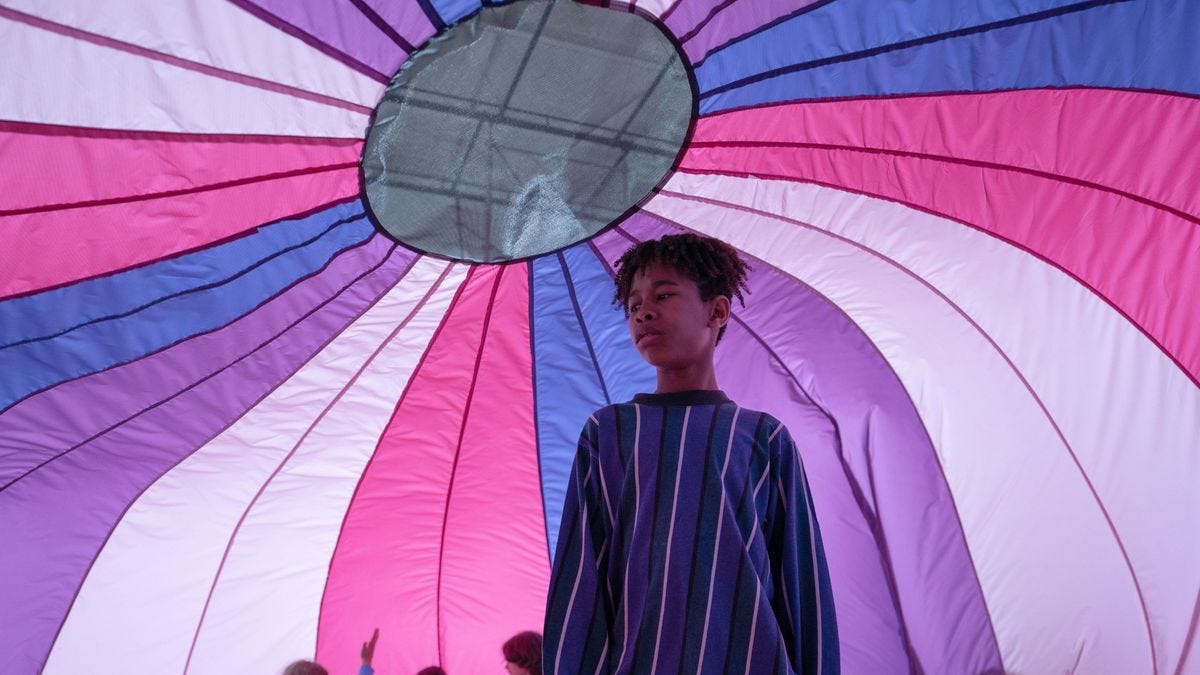
I Saw the TV Glow follows Owen, a teenager who becomes fascinated by the mysterious 1990s television show The Pink Opaque after being introduced to it by Maddy, an older girl who is also deeply invested in the series. For Owen and Maddy, the show becomes more than entertainment. It gives them a world that feels more real and meaningful than their isolated suburban lives. As Owen grows older, however, he becomes increasingly disconnected from himself, while The Pink Opaque remains a reminder of a life he feels he was supposed to have.
The horror of I Saw the TV Glow is not simply the supernatural world surrounding Owen. It is the possibility of spending your entire life knowing that something is wrong but being too afraid to change it. The Pink Opaque represents an authentic inner self and a space where queer expression feels possible, especially compared with the rigid and mundane world Owen lives in. The television provides an escape from isolation for Owen and Maddy, but it also makes the distance between that world and their everyday lives even more apparent.
The title itself becomes symbolic. The glow from the television is beautiful, strange, and inviting, but it also hints at something inside Owen that he cannot fully acknowledge. The blue and pink light surrounding the characters contrasts with the coldness of their ordinary lives, suggesting that the television is revealing a version of reality that Owen has been unable to fully confront.
This symbolism becomes even more literal through Owen’s body. Near the end of the film, television static and glowing light pour from his chest as he finally breaks down. His suppressed identity can no longer remain buried. The image turns repression into something physical: the part of himself he has spent years hiding is literally trying to escape.
The show’s storyline about a character being buried alive and forced to forget who they are also mirrors Owen’s experience. Being buried becomes a metaphor for slowly suffocating your identity and becoming disconnected from your own life. By the end, Owen’s greatest tragedy is not simply that he is unhappy. It is that he has spent so long repressing himself that he struggles to imagine another way to live.
Aftersun (2022)
Depression, childhood memories, parent-child relationships, and how we understand people differently as we grow older.
Genre: Drama
Director: Charlotte Wells
Release date: October 21, 2022
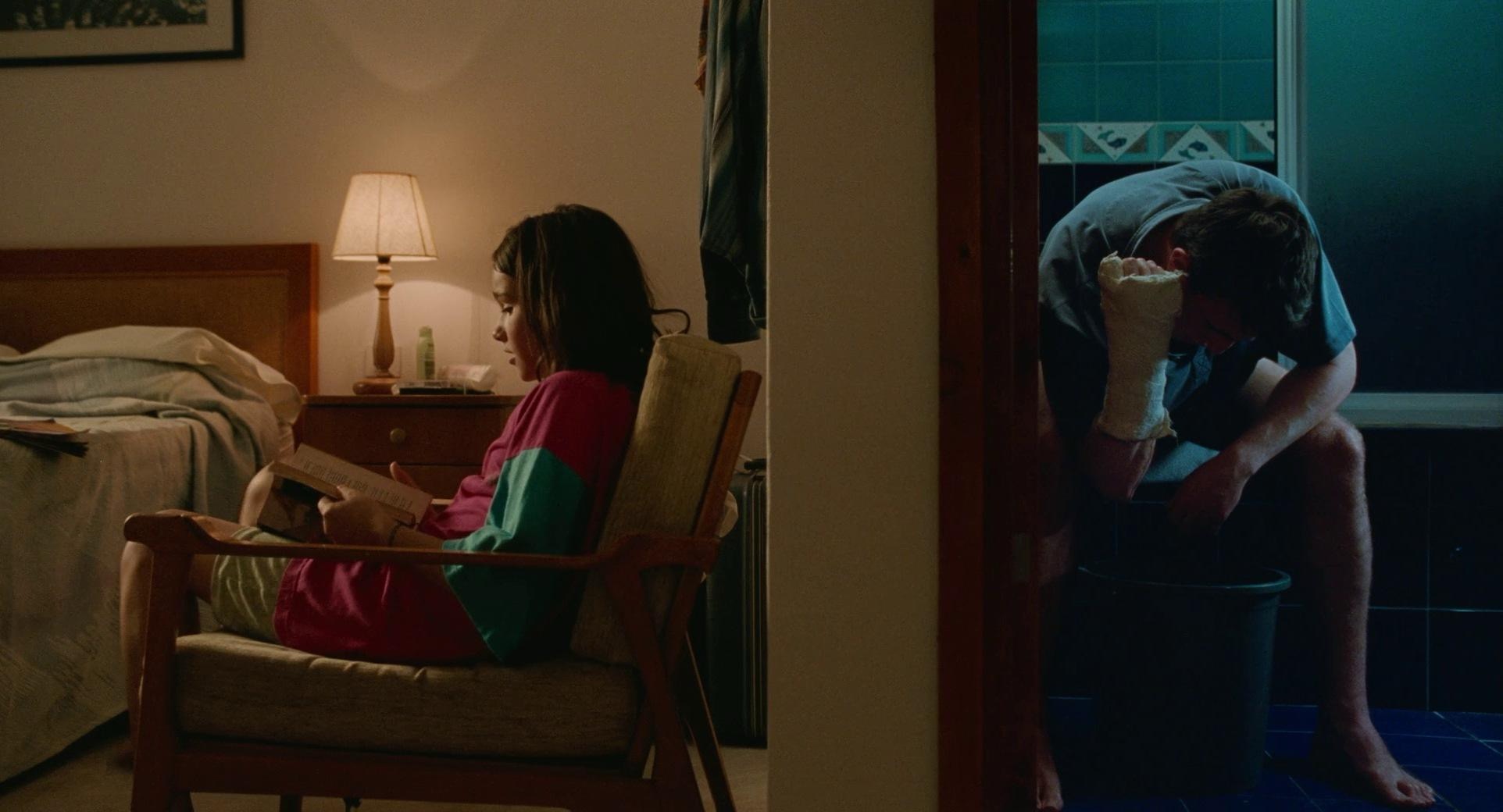
Aftersun follows 11-year-old Sophie on a vacation to Turkey with her father, Calum. Her parents are divorced, and the trip gives Sophie a chance to spend time with her father away from their usual lives. From Sophie’s perspective, the vacation is filled with ordinary childhood experiences: swimming, exploring the resort, singing karaoke, and spending time with her dad. But adult Sophie looks back at recordings from the trip and begins to recognize signs of Calum’s depression that she could not understand when she was eleven.
While it is never explicitly confirmed what happens to Calum, the film strongly suggests that he dies by suicide sometime after the holiday. Calum says goodbye to 11-year-old Sophie at the airport, and the trip is revealed to be the last time Sophie ever sees her father in person. Throughout the film, abstract flash-forward scenes show Calum dancing frantically in a strobe-lit nightclub while adult Sophie watches him from a distance, trying to reach him. In the final sequence, adult Sophie finally reaches out and embraces her father in the flashing lights of the rave, but Calum then walks through a set of double doors, mirroring the airport exit, and disappears into the darkness. Calum also turns off the video camera and steps into the darkness, an image that can be read as symbolizing his withdrawal from the world. Her repeated return to the footage feels like an attempt to reconnect with her father and understand the person she could not fully see at the time.
One of the most powerful aspects of Aftersun is that the audience experiences Calum’s struggles largely through Sophie’s limited perspective. She knows her father sometimes seems sad, distracted, or distant, but she does not yet have the emotional understanding to recognize what he is experiencing. As an adult, she looks back at the same memories differently, trying to piece together a version of her father that she could not see as a child.
The film’s use of mirrors, windows, television screens, and reflections reinforces this idea. Calum is frequently seen fragmented or ghostlike in reflective surfaces, suggesting how difficult it is for Sophie to see the complete person behind the father she remembers. These images also visually represent Calum’s depression, making him appear physically present but emotionally absent or not fully there. The camcorder footage becomes another kind of reflection. The recordings seem like objective evidence of what happened, but they still cannot tell Sophie exactly what Calum was feeling.
Water also takes on two different meanings. For Sophie, the pool and ocean become a visual expression of freedom, curiosity, and the excitement of growing up. For Calum, water can feel dark and bottomless, reflecting the weight of his depression and the possibility of drowning, both literally and emotionally. The same setting therefore represents two completely different emotional realities.
The film’s imagery of a Polaroid slowly developing also reveals how understanding someone can take time. As children, we may only see part of the picture. Years later, memories develop into something clearer, but that clarity is never perfect. Sophie can recognize things about her father as an adult that she could never have understood at eleven, but she can never go back and ask him what she missed.
That is what makes Aftersun so heartbreaking. The memories Sophie has are real, but they are incomplete. She remembers her father dancing with her and sharing ordinary moments, while also slowly realizing how much pain he was hiding. The film asks how well we can ever know the people we love when we only understand parts of their lives.
Lady Bird (2017)
Growing up, self-creation, mother-daughter relationships, and learning to appreciate where you came from.

Genre: Coming-of-Age / Comedy-Drama
Director: Greta Gerwig
Release date: November 3, 2017
Lady Bird follows Christine “Lady Bird” McPherson during her senior year of high school in Sacramento. She desperately wants to leave home and attend college somewhere far away, believing that her life will only truly begin once she escapes. At the same time, she struggles with her relationship with her mother, Marion, while navigating friendships, romance, school, money, and her changing sense of identity.
Lady Bird’s name is the first sign of her desire to create herself. Christine chooses the name “Lady Bird” because she wants control over how she is seen. It represents both independence and insecurity: she wants to stand out and become someone special, but she is still trying to figure out exactly who that person is.
Sacramento represents the life she is desperate to escape. She sees it as boring, ordinary, and limiting, just as she sees parts of herself as ordinary and limiting. But the film gradually reveals that her hatred of Sacramento is more complicated than she realizes. Her college application essay describes the city in loving detail, showing that she has been paying attention to the place all along.
Her relationship with her mother works in a similar way. Marion’s criticism can feel harsh, but her attention is also one of the ways she expresses love. The two constantly clash because Lady Bird wants independence while still wanting her mother’s approval. Their relationship is messy because their love is messy.
The film’s visual details reinforce the intensity of adolescence. Lady Bird’s pink cast at the beginning of the film can reflect her fragile but defiant teenage identity. Red repeatedly appears in her clothes, bedroom, and objects around her, reflecting the passion, anger, insecurity, and intensity that can define adolescence. Like Lady Bird herself, these colors are bold and difficult to ignore, reflecting how teenagers can experience emotions with an intensity that makes everything feel bigger.
By the end, Lady Bird has finally achieved what she wanted: she leaves Sacramento and goes to college in New York. Yet once she is gone, she begins to miss the place she spent years trying to escape. She even calls home and leaves a message for her mother, calling herself Christine rather than Lady Bird.
That change is important. Lady Bird’s growth does not mean abandoning the person she was or pretending Sacramento never mattered. It means recognizing that the place she came from helped create who she is. Sometimes distance is what allows us to see our past with more understanding and appreciate how much it shaped the person we become.
Hereditary (2018)
Generational trauma, family dysfunction, mental illness, and the fear of losing control.
Genre: Supernatural Horror / Psychological Horror
Director: Ari Aster
Release date: June 8, 2018
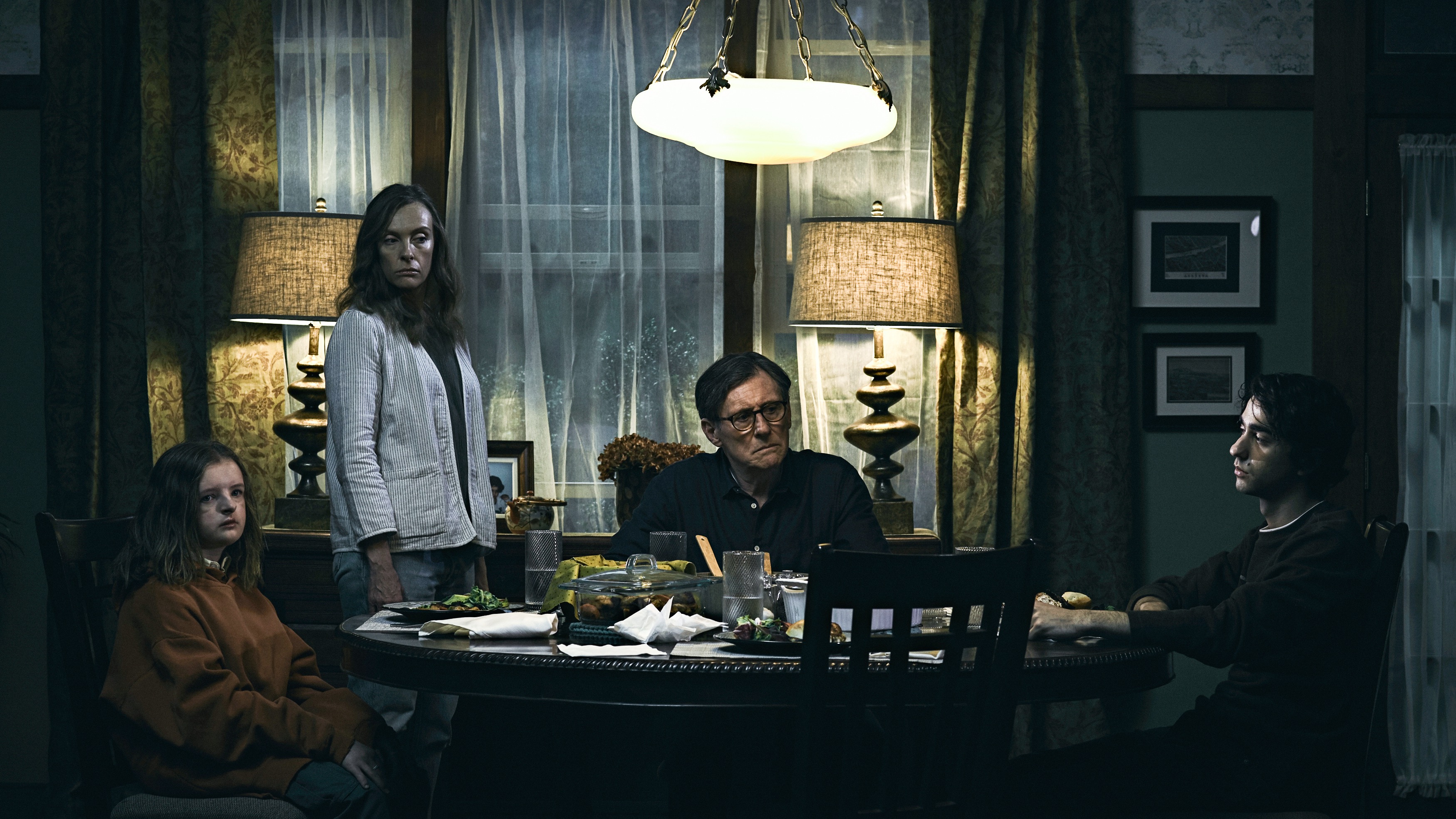
Hereditary centers on the Graham family following the death of Annie’s mother, Ellen. After the funeral, Annie’s son Peter takes Charlie to a party without properly watching her, and after she eats a piece of cake containing nuts, she has a severe allergic reaction. While Peter is desperately driving her to the hospital, Charlie sticks her head out of the car window for air and is decapitated by a telephone pole. As increasingly disturbing events unfold, Annie discovers that her mother had been hiding a connection to a mysterious cult. The supernatural horror becomes inseparable from the family’s existing history of trauma, mental illness, resentment, and loss.
The title Hereditary immediately points toward the film’s central idea: what we inherit from our families. The Grahams inherit more than genetics or family history. They inherit trauma, family secrets, psychological struggles, and ultimately a supernatural fate that has been planned long before they understand what is happening.
Annie’s miniature work is one of the clearest examples of this theme. She creates tiny models of traumatic events and rooms from her own life, giving her the ability to recreate painful experiences in a controlled environment. But the miniatures also reveal the larger story. Annie believes she can control the pieces of her life, while the cult has actually been manipulating her family like figures inside a dollhouse. The cult connected to Annie’s mother, Ellen, has been secretly preparing the Graham family for a supernatural ritual to place the demon King Paimon into Peter’s body. Ellen was part of this group and deliberately positioned the family so that Paimon could eventually take control of Peter. What appears to be a series of random tragedies is therefore part of a plan that has been unfolding across generations.
The film repeatedly blurs the line between the miniatures and the real house, suggesting that the family may be trapped inside a design they never chose. The Paimon symbol appears throughout the film, including on the telephone pole involved in Charlie’s death, subtly revealing that what appears to be a series of horrible accidents has actually been carefully orchestrated.
Decapitation becomes another recurring symbol. Charlie’s death separates her head from her body, while Annie’s eventual death also involves the loss of her head. The severed head represents the separation of mind and body, but it also connects to the cult’s goal of placing Paimon into a suitable male host. Characters repeatedly lose control over their bodies and actions, whether through grief, psychological breakdown, or possession.
The supernatural story also mirrors the family’s history of mental illness. Annie’s mother is described as having dissociative identity disorder, while the family has a history of depression, suicide, and other psychological struggles. The film deliberately makes it difficult to determine where mental illness ends and supernatural possession begins.
That uncertainty is part of what makes Hereditary so disturbing. Annie spends the film desperately trying to understand what is happening to her family, but the more she searches for control, the more she realizes that the family may have been trapped in this cycle long before she was born. The horror is not only that something evil has entered the family. It is the possibility that the family never had complete control over their own story.
Midsommar (2019)
Grief, vulnerability, emotional isolation, and the desperate need for connection.
Genre: Folk Horror / Psychological Horror
Director: Ari Aster
Release date: July 3, 2019
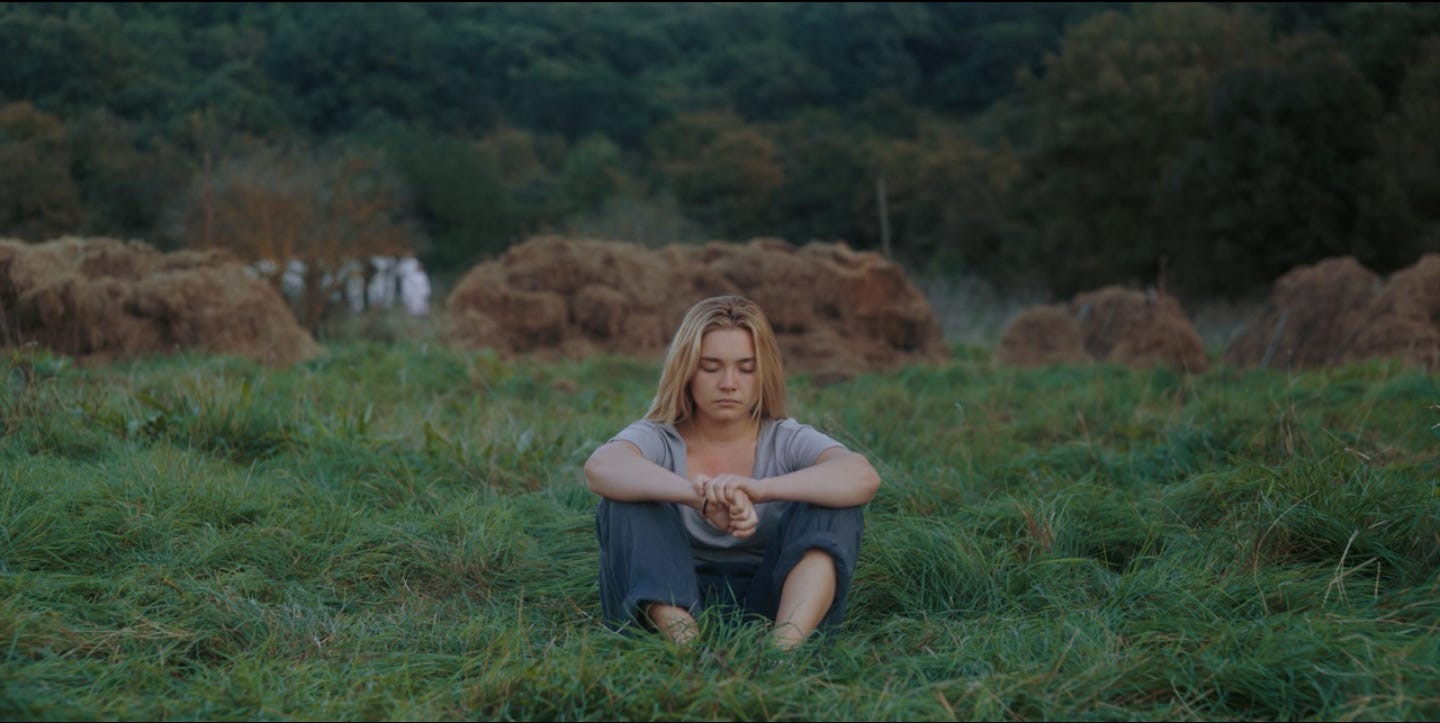
Midsommar follows Dani, a young woman already struggling in an emotionally distant relationship with Christian when her parents and sister suddenly die in a murder-suicide. Months later, she travels with Christian and his friends to Sweden, where they visit the seemingly peaceful commune of the Hårga. What begins as a beautiful celebration gradually becomes increasingly disturbing as the group’s traditions reveal their violent nature.
Dani arrives at the Hårga emotionally isolated. Christian already resents the emotional responsibility that comes with Dani’s trauma, and his friends often treat her grief as uncomfortable or inconvenient. The Hårga does the opposite. When Dani cries, they cry with her. When she experiences pain, they physically surround her and experience it alongside her. For someone who feels completely alone, that kind of emotional recognition is incredibly powerful.
This is what makes the commune so disturbing. The Hårga gives Dani exactly what she has been missing, but only within a system designed to control her. The community’s acceptance becomes another form of manipulation.
The flowers throughout the film reinforce this transformation. Dani’s May Queen crown appears almost alive, with flowers that seem to pulse and breathe around her. By the end, she is visually becoming part of the Hårga’s natural world. The bright yellow flowers associated with the commune create an almost cheerful surface that hides the violence underneath. Even Dani’s final smile exists within this contradiction: she appears happier and more connected than she has at any other point in the film, but that happiness has come through something deeply disturbing.
Christian’s bear costume also foreshadows his fate. The bear can be read as representing the strength and danger of masculine power, while his placement inside the bear’s body makes him part of the Hårga’s sacrificial ritual. His fate reflects the film’s reversal of power. Throughout the movie, he takes Dani’s emotional needs for granted. By the end, Dani is the one making the decision about what happens to him.
The constant daylight is important, too. Unlike traditional horror films that hide their violence in darkness, Midsommar keeps almost everything visible. The endless sunlight blurs the boundary between night and day, horror and beauty, grief and happiness. Dani’s emotional boundaries begin to collapse in the same way.
Her final smile is therefore unsettling because it can mean several things at once. She may finally feel free from Christian, or she may have completely surrendered herself to the Hårga. Either way, Midsommar suggests that when someone is desperate to belong, even something dangerous can begin to feel like home.
Although these five films tell completely different stories, they all ask what happens when the things beneath the surface become impossible to ignore. In I Saw the TV Glow, a television show becomes a symbol for an identity that has been suppressed for too long. In Aftersun, old vacation footage becomes a way for Sophie to understand the depression her childhood self could not see. In Midsommar, a grieving woman finds the belonging she desperately wants in a community that ultimately controls her. In Hereditary, miniatures, symbols, and family history reveal a terrifying lack of control over the lives we inherit. And in Lady Bird, leaving home becomes the thing that finally allows Christine to appreciate where she came from.
What connects these films is not simply that they are made by A24 or that they use striking visual styles. It is their ability to turn ordinary human emotions into something we can see. Grief becomes a flower crown. Repression becomes a glow coming from inside the body. Depression appears in reflections and dark water. Generational trauma becomes a dollhouse. Growing up becomes a name and a city you once wanted to escape.
That is what makes A24 films so memorable. The meaning is not always explained directly. Instead, it is hidden in the images, relationships, symbols, and moments that stay with us after the credits. Beneath the horror, the drama, and the coming-of-age stories are questions that are much more familiar: Who am I? What have I inherited? Who truly understands me? And how do I learn to live with the person I am becoming?