
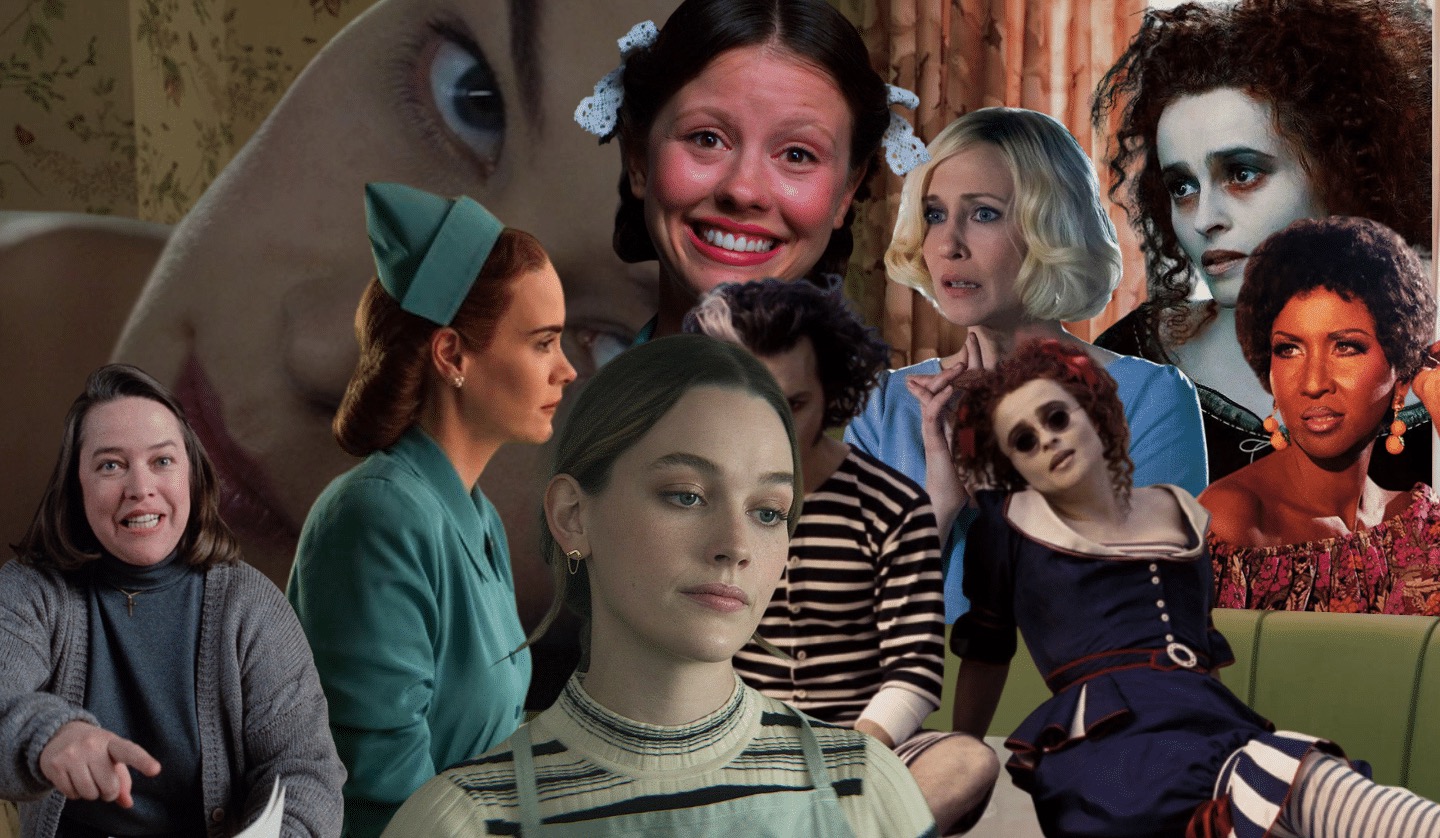
The ‘crazy woman’ is often a reaction, NOT the cause.
*Contains Spoilers*
Women in film are frequently described as unstable, irrational, obsessive, or “crazy” when their behavior becomes difficult for the people around them to understand. But what happens when we stop looking at the woman as the problem and start looking at what happened to her?
Across Obsession, Promising Young Woman, Gone Girl, The Stepford Wives, and Rosemary’s Baby, women respond to various forms of male power. Some are controlled through desire, some are harmed by violence, some are discredited, and others are denied control over their own bodies (sounds familiar, huh?). These films do not all portray their female characters as innocent or morally perfect. Instead, they complicate the idea that a woman’s “crazy” behavior exists in isolation. Again and again, the circumstances created by men help explain why these women become so angry, fearful, obsessive, or resistant.
Obsession (2026) — Desire as Control

Inde Navarrette as Nikki Freeman
Genre: Supernatural Horror / Psychological Thriller
Director: Curry Barker
Release date: May 15, 2026
Obsession presents one of the most literal versions of male desire becoming control. Bear has romantic feelings for his friend and coworker Nikki, but he doesn’t know if these feelings are reciprocated. Instead of facing possible rejection, Bear uses the supernatural One Wish Willow to make Nikki love him “more than anything in the world.” His wish takes away her ability to choose whether she loves him, ultimately taking away her autonomy.
Bear initially sees his wish as romantic. He wants Nikki to love him, but he never considers whether Nikki actually wants to. Once the wish takes effect, Nikki becomes increasingly obsessive and violent, while the real Nikki is trapped and unable to control her own body. The most disturbing part is that Bear eventually realizes that Nikki is not choosing these feelings for herself and is in pain, but this realization comes only after he has already taken away her ability to choose. Even though he eventually tries to undo the wish, he cannot erase the fact that he created the situation for selfish reasons. Even after getting exactly what he wanted, he is not satisfied because he knows her love is forced. The real horror is not simply that Bear made Nikki love him, but that he wanted her love so badly that he was willing to take away her choice to get it.
The film therefore complicates the idea of the “obsessive woman.” Nikki is the one we see acting “crazy” and violent, but the situation begins with Bear’s desire to override her free will. Her apparent obsession is LITERALLY the result of a man’s attempt to control how she feels.
Promising Young Woman (2020) — Anger After Violence
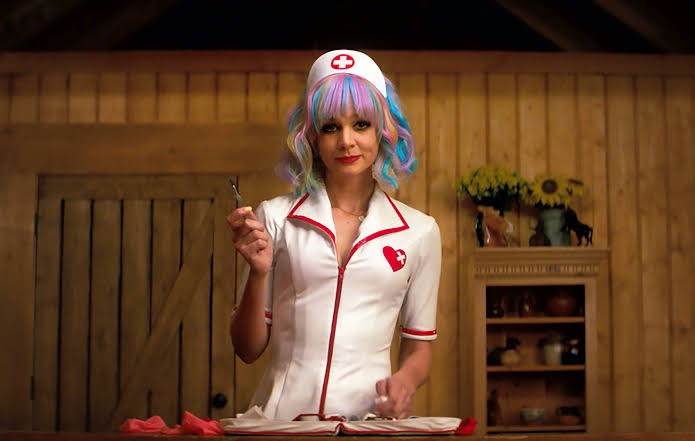
Carey Mulligan as Cassandra "Cassie" Thomas
Genre: Dark comedy / Thriller / Vigilante
Director: Emerald Fennell
Release date: December 25, 2020
Cassie’s anger does not appear out of nowhere. Her best friend Nina was sexually assaulted by Al Monroe while they were in medical school, and the people around Nina failed to hold Al accountable. The assault was witnessed, but Nina was dismissed, while Al was allowed to continue with his life. Ryan, someone Cassie eventually dates, was also present during the assault. Nina later dies by suicide, while Cassie abandons medical school and dedicates herself to confronting the people who helped make Nina’s suffering possible.
Cassie’s behavior is intentionally unsettling. She pretends to be extremely drunk in bars, allowing men to take her home before revealing that she was sober the entire time. She confronts people who participated in or dismissed Nina’s assault. By the end of the film, Cassie’s anger has turned into a dangerous attempt at revenge when she confronts Al at his bachelor party. Her actions are morally complicated, but the film makes it impossible to separate them from the violence and institutional failure that created them. Even after Cassie’s death, the people responsible continue trying to protect themselves rather than fully confront what they did.
Cassie is therefore not simply an “angry” woman. She is someone who has been unable to move past a system that never allowed Nina to receive justice. The film asks what happens when a woman is expected to quietly heal from violence while the men responsible are allowed to move on with their lives.
Gone Girl (2014) — Performing the ‘Crazy Wife‘
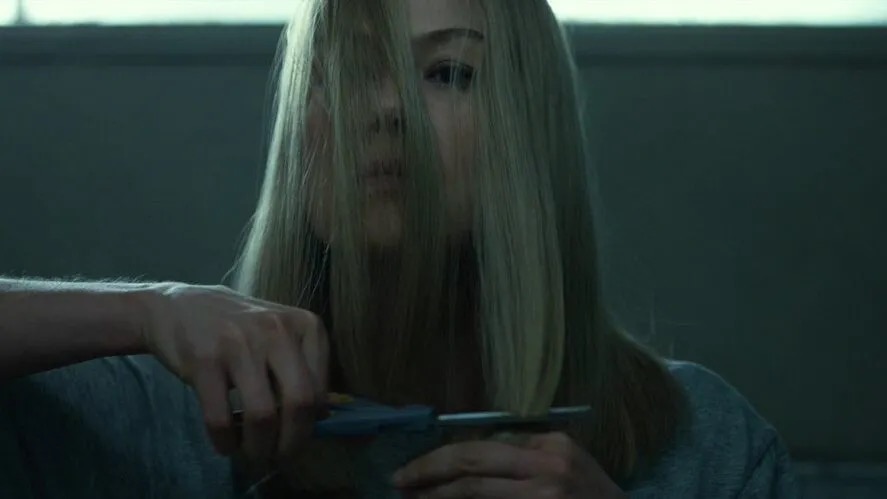
Rosamund Pike as Amy Dunne
Genre: Psychological Thriller / Mystery / Crime Drama
Director: David Fincher
Release date: October 3, 2014
Amy Dunne takes the idea of performing the “crazy woman” and turns it into a weapon. Throughout her marriage to Nick, Amy has been expected to perform different versions of the ideal woman. She was raised as the inspiration for the fictional “Amazing Amy,” a character who was always more successful, more accomplished, and more perfect than the real Amy. Her relationship with Nick continues this pattern, as she attempts to perform an idealized version of femininity.
When Nick cheats on her and their marriage collapses, Amy constructs an elaborate disappearance designed to make him look responsible for her murder. She manipulates evidence, creates a false diary, and carefully constructs the image of herself as a terrified, abused wife. The public quickly turns against Nick because the story Amy creates fits the cultural image of the perfect victim. But Amy is not simply a victim either. She deliberately weaponizes the assumptions people already have about women, marriage, and female instability.
That is what makes Amy so complicated. She understands that society is ready to believe a woman is either a perfect victim or a “crazy woman,” with very little space between the two. Amy learns how to perform both. Her eventual return to Nick also becomes another performance, as the two settle into a marriage built around appearances, manipulation, and mutual control. Gone Girl therefore asks whether the roles imposed on women can become so restrictive that performing them becomes a form of power.
The Stepford Wives (1975) — Perfection Requires Submission
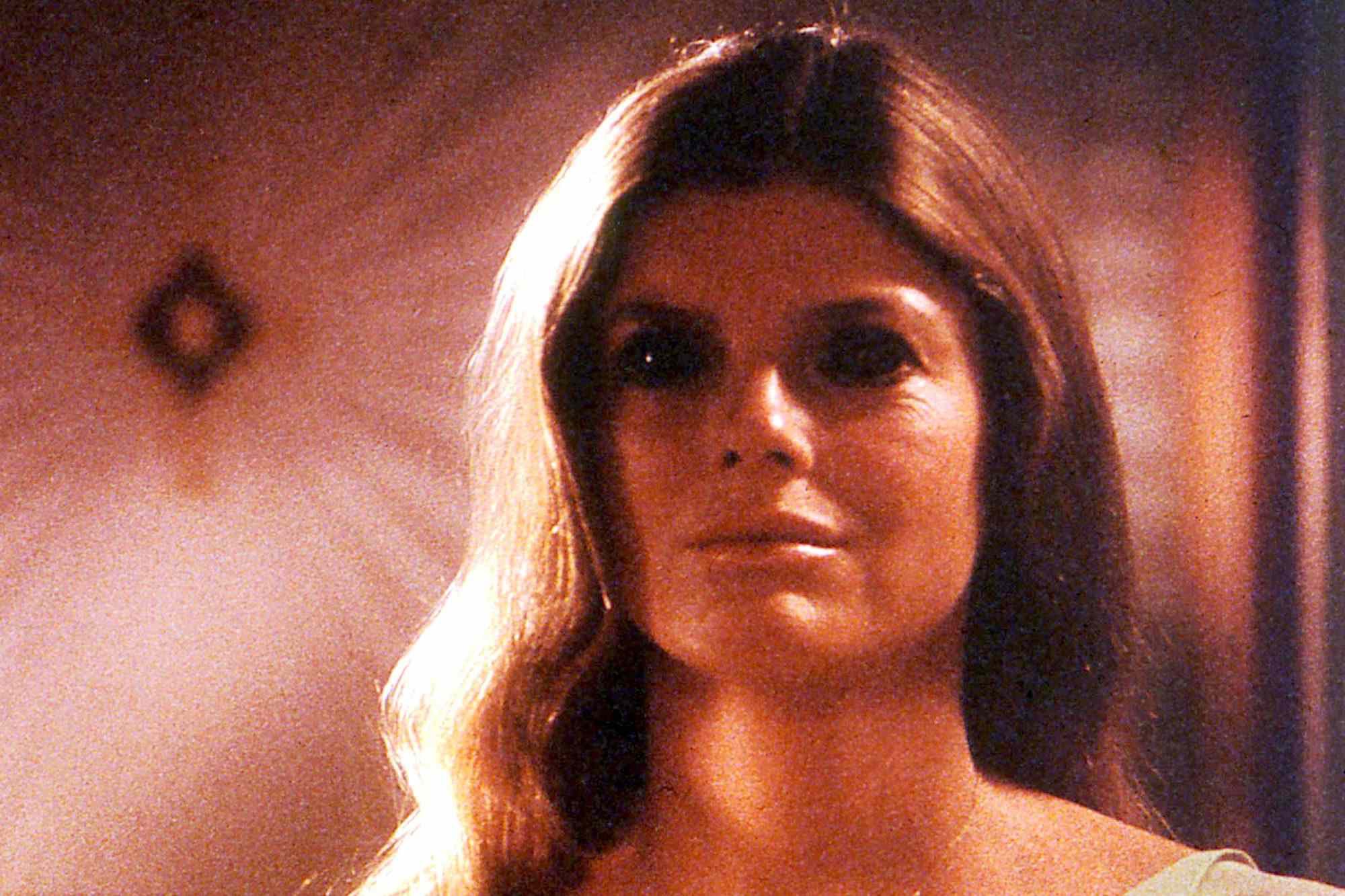
Katharine Ross as Joanna Eberhart
Genre: Satire / Dark Comedy / Science Fiction / Thriller
Director: Bryan Forbes
Release date: February 12, 1975
Joanna enters Stepford as an independent woman who enjoys photography and wants a life beyond being a traditional housewife. Almost immediately, she notices something strange about the women around her. They are beautiful, perfectly groomed, obsessed with cleaning and cooking, and completely devoted to their husbands. They also seem to have lost the interests and independence they had before moving to Stepford.
Joanna’s refusal to accept this version of womanhood makes her increasingly isolated. She and Bobbie investigate the strange behavior of the other wives, only to discover that the women were once independent and politically active before being transformed. Joanna’s growing fear is treated as irrational, and when she tells a psychiatrist that the men of Stepford are conspiring against the women, her suspicions are framed as paranoia. But Joanna is not imagining the threat. The men really are replacing their wives with submissive replicas.
The horror of The Stepford Wives comes from how completely the men redefine female “normalcy.” A woman who questions her husband, pursues her own interests, or refuses to conform is treated as a problem that needs to be fixed. The perfect woman is not simply expected to be obedient; she is literally created through the destruction of female autonomy. Joanna’s fear is therefore not evidence that she is unstable. It is evidence that she correctly recognizes what everyone else refuses to see.
Rosemary’s Baby (1968) — Patriarchal Control
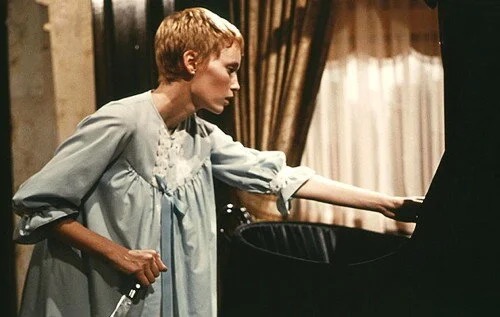
Mia Farrow as Rosemary Woodhouse
Genre: Psychological Horror / Supernatural Thriller
Director: Roman Polanski
Release date: June 12, 1968
Rosemary’s story centers on one of the most intimate forms of patriarchal control: control over her own body. After moving into the Bramford with her husband Guy, Rosemary becomes pregnant under circumstances she does not fully understand. As her pregnancy progresses, Guy becomes increasingly distant while the Castavets, their strange neighbors, take an unusual interest in her and her unborn child. Eventually, Rosemary discovers that the people around her have been conspiring against her, including her own husband. Her pregnancy, which should be a deeply personal experience, has secretly become part of a plan created and controlled by others.
What makes Rosemary’s situation especially disturbing is how the men around her repeatedly assume authority over her choices. Guy dismisses her concerns, Dr. Sapirstein controls her pregnancy under the direction of the people conspiring against her, and the Castavets manipulate the people around her to keep her unaware of what is actually happening. Rosemary is expected to trust the men who claim to be protecting her while having little say over what happens to her own body. Even when she begins to recognize that something is wrong, her fears are treated as irrational rather than taken seriously. This reflects a larger form of patriarchal control in which women’s bodies and reproductive choices are treated as things that men can manage, regulate, and make decisions about for them.
Rosemary’s fear and paranoia therefore cannot be separated from the fact that she is genuinely being deceived and controlled. The people around her are not protecting her from an imagined threat; they are the threat. What makes her situation horrifying is that the men in her life use their authority as husbands, doctors, and supposed protectors to take control away from her while making her believe she is simply being difficult or irrational.
Together, these films challenge the cultural construction of the “crazy woman” by showing that what looks like female irrationality often has a history. Desire becomes control, violence becomes anger, expectations become performance, perfection becomes submission, and pregnancy becomes a battleground over bodily autonomy. The women may make destructive, complicated, or even morally questionable choices, but their stories cannot be separated from the systems of male power surrounding them. Sometimes the real horror is not that a woman has become “crazy,” but that we were taught to look at her reaction instead of asking what caused it.
Honorable Mentions
Ex Machina (2014) — Creation as Control

Alicia Vikander as Ava
Genre: Psychological Thriller / Science Fiction
Director: Alex Garland
Release date: December 16, 2014
Ava’s manipulation and eventual violence are shaped by Nathan’s decision to create, control, and exploit her, raising questions about whether she is truly the “dangerous woman” or a product of the environment he created.
Marnie (1964) — Trauma as “Instability”
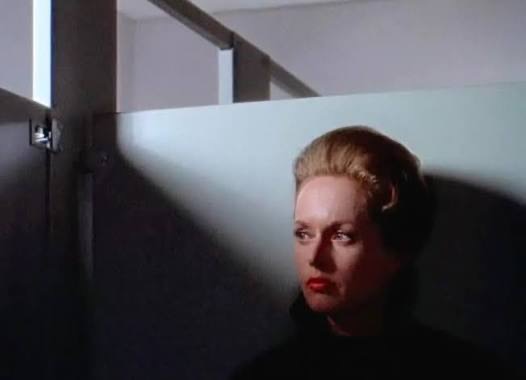
Tippi Hedren as Margaret "Marnie" Edgar
Genre: Psychological Thriller / Mystery / Drama
Director: Alfred Hitchcock
Release date: July 9, 1964
Marnie’s fear, compulsions, and emotional detachment are rooted in unresolved childhood trauma, showing how a woman’s psychological distress can be labeled as instability rather than understood as the result of violence.
Gaslight (1944) — Making Her Doubt Herself
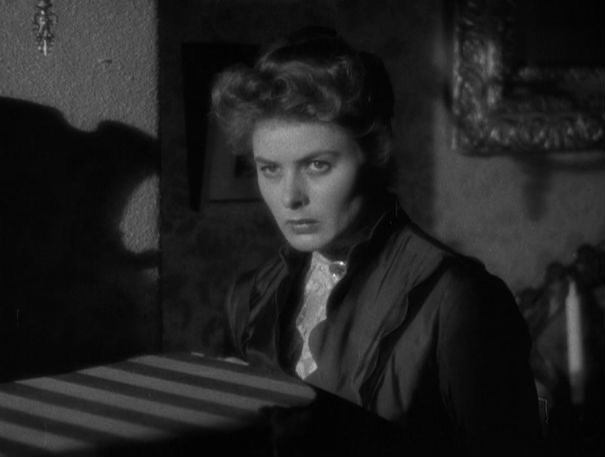
Ingrid Bergman as Paula Alquist Anton
Genre: Psychological Thriller / Mystery
Director: George Cukor
Release date: May 4, 1944
Paula’s growing fear and confusion are deliberately produced by her husband’s psychological manipulation, demonstrating how men can create the very “instability” they later use to discredit women.