
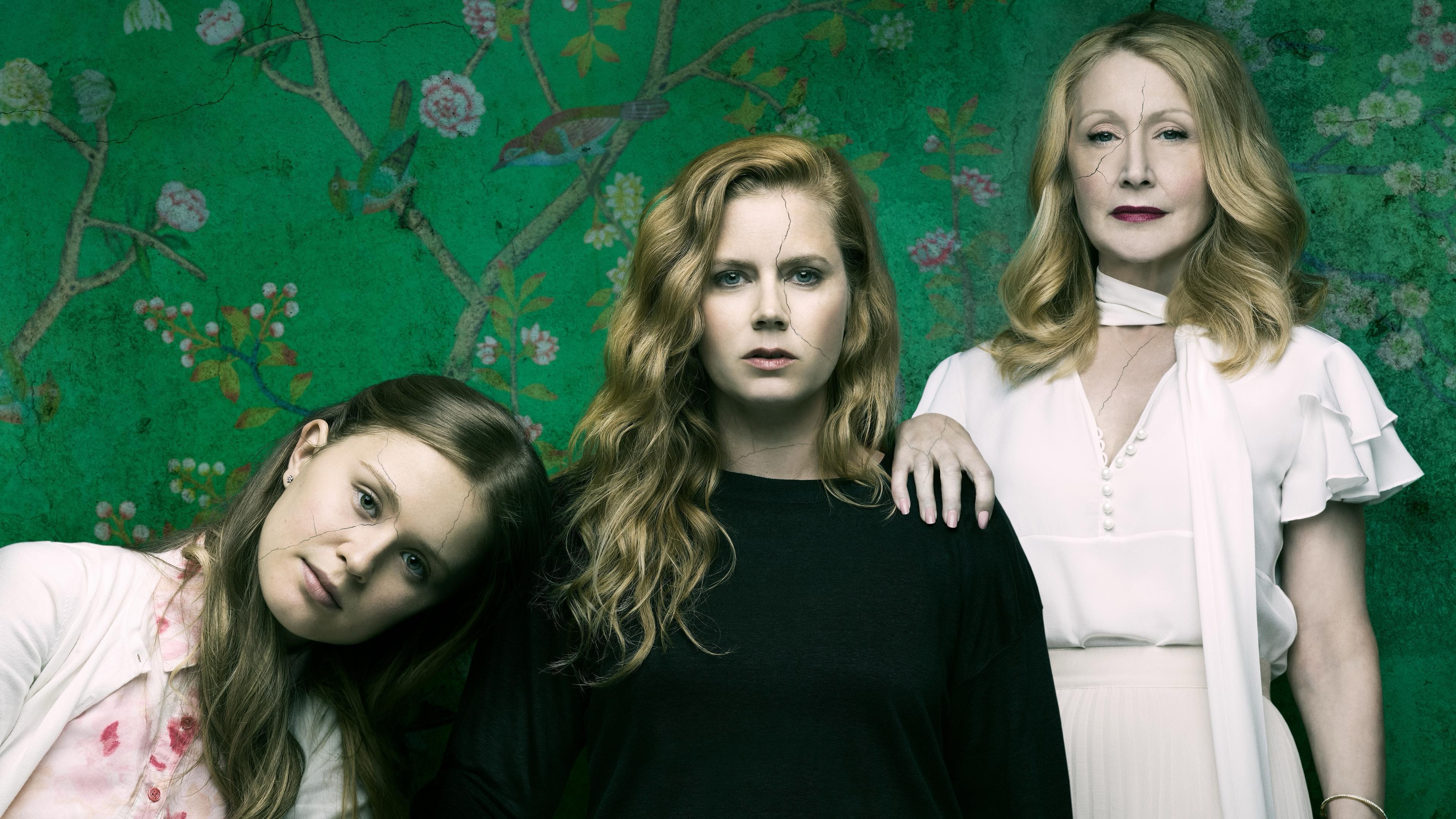
A visual study of Adora, Camille, & Amma — how appearance becomes a space for performance, control, and rebellion.
*Contains Spoilers*
Sharp Objects (2018)
Set in the small, close-knit town of Wind Gap, Missouri, HBO’s Sharp Objects follows journalist Camille Preaker as she returns to her hometown to investigate the murders of two young girls. The case forces Camille back into the world she has spent years trying to escape: the Crellin family home, her estranged mother Adora, and her younger half-sister Amma. Camille’s return also brings her back to the memory of her younger sister Marian, who died when Camille was still a child, a loss that continues to shape her relationship with her family and her hometown. As she investigates the murders, Camille is forced to confront both the murders unfolding in Wind Gap and the painful history she left behind. Her return places her directly inside the carefully controlled world Adora has built around her family, where appearances, reputation, and femininity are carefully maintained. But in Sharp Objects, the story is communicated through more than dialogue and plot. The show’s visual language—its color palettes, costumes, interiors, lighting, framing, and recurring imagery—distinguishes the three women and the identities they present to the world. By looking closely at how Adora, Camille, and Amma are visually constructed, the show reveals how that polished surface begins to crack.
Adora Crellin — The Aesthetic of Perfection
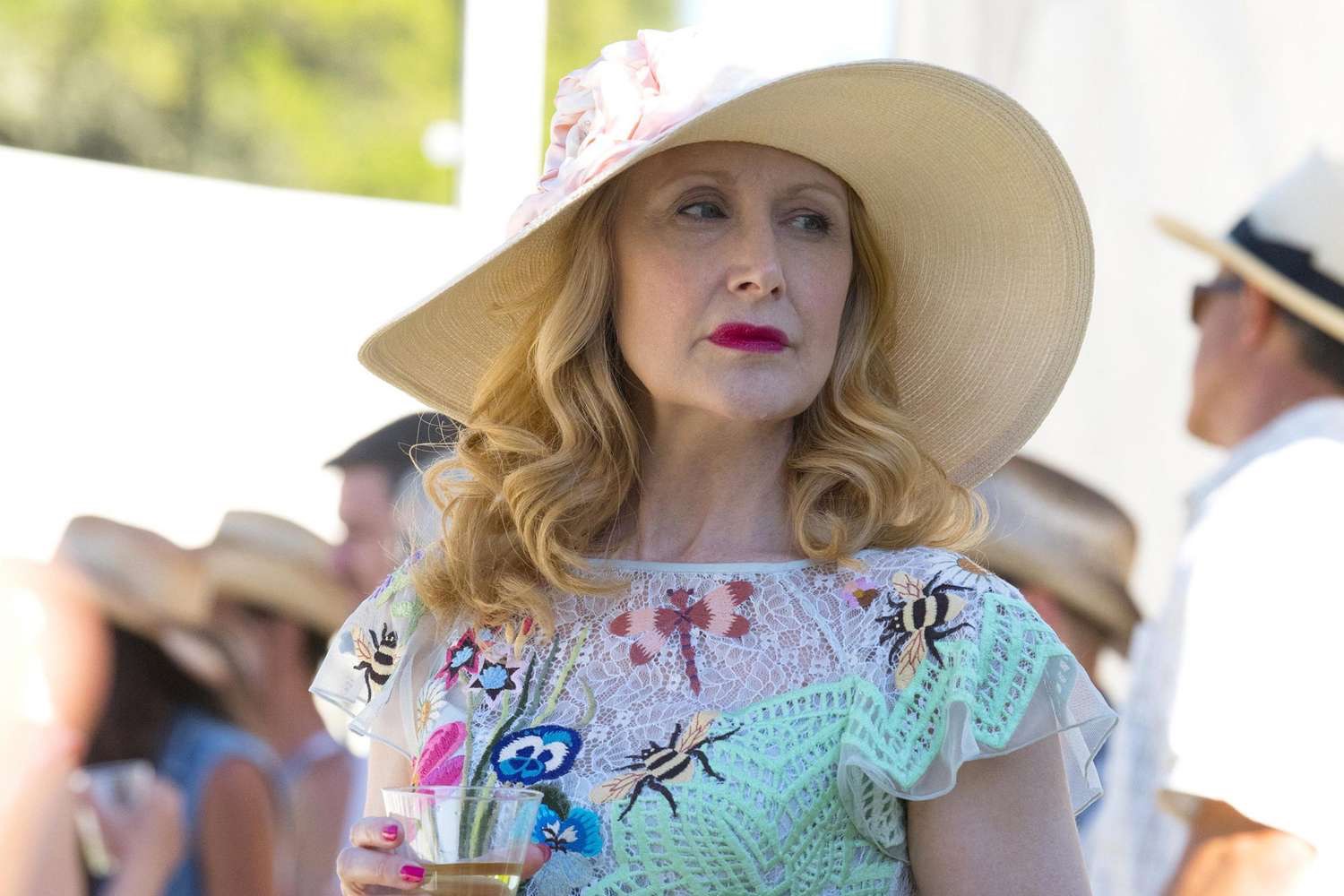
Adora’s world is constructed around an almost suffocating sense of beauty. The Crellin house is filled with pastel colors, floral patterns, and antique furniture, almost as if the space has been carefully curated rather than lived in. Her obsession with preserving the master bedroom’s pristine ivory floor becomes one of the clearest symbols of her need for order. The floor becomes a visual metaphor for Adora herself: immaculate, expensive, and beautiful on the surface, yet deeply connected to the violence beneath the Crellin family’s polished exterior. Its pristine ivory reflects the family’s wealth and status, while its association with death and exploitation gives that beauty an unsettling quality beneath the surface. In the same way, Adora presents herself as a fragile, elegant, and nurturing matriarch while using maternal care as a means of creating dependence and control. The floor’s beauty does not erase what lies beneath it—it conceals it, just as Adora’s carefully maintained image conceals the abuse within her family.
Adora’s wardrobe reinforces this polished persona. Flowing pastel dresses, luxurious fabrics, soft colors, and perfectly styled hair create an almost ethereal version of traditional Southern femininity. Her Southern Belle aesthetic relies on delicate textures and romantic silhouettes to suggest fragility, softness, and maternal warmth. Her appearance feels intentionally out of time, creating the image of a Southern Gothic matriarch—elegant, wealthy, delicate, and completely in control. Yet this femininity is also a form of social performance. Adora is deeply invested in how her family appears to the outside world, and her daughters become part of that image. Marian’s death further shapes Adora’s identity as a grieving, devoted mother, intertwining tragedy with her social identity and influence within Wind Gap.
That image of motherhood becomes increasingly connected to control. Adora’s attention to illness allows her to establish relationships of dependence with her daughters, repeating a dynamic already seen in her relationship with Marian. Rather than simply caring for her children, Adora creates the vulnerability that makes them dependent on her, turning maternal care into a mechanism of control. The house functions in much the same way: when Adora cannot completely control her daughters, she can control the environment surrounding them. Beneath the pastel colors, pristine surfaces, and carefully maintained femininity, her aesthetic of perfection becomes a visual language of control, dependence, and concealment.
Camille Preaker — The Visual Language of Rebellion
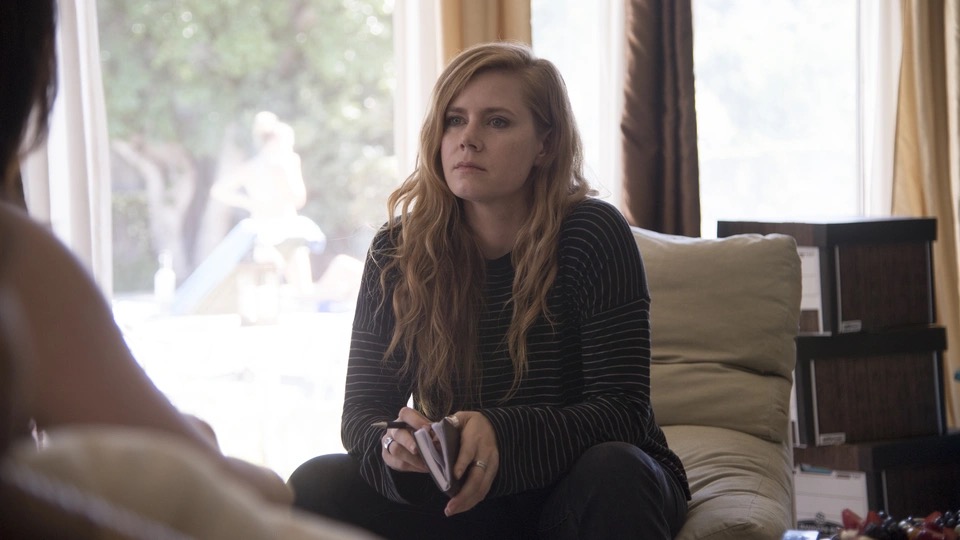
Camille exists almost entirely outside of Adora’s polished aesthetic. Where Adora is surrounded by pastels, flowers, and ornate interiors, Camille is presented through dark colors, heavy clothing, harsh lighting, and fragmented spaces. Her appearance feels deliberately out of place in Wind Gap’s humid summer. She is repeatedly dressed in dark sweaters, jeans, and boots, creating a silhouette that feels like armor. While the women around her wear light, airy dresses and soft fabrics, Camille covers herself almost completely. Her clothing becomes a physical barrier between herself and the people around her, concealing the words carved into her skin and shielding her from the scrutiny of Wind Gap—and from Adora.
The tension between these visual identities becomes especially clear when Adora takes Camille shopping for clothes. Surrounded by the pastel dresses associated with Adora and Amma, Camille is pushed into clothing that exposes rather than conceals her body. The soft pink fabric against her scarred skin makes the contrast impossible to ignore: the femininity Adora carefully constructs becomes something that exposes Camille rather than protects her.
Her appearance also provides a visual expression of what she carries internally. Her unkempt hair, exhausted complexion, and minimal makeup reject the polished femininity represented by Adora and the carefully constructed youthfulness of Amma. Most importantly, her scars turn her body into a literal canvas of text. Words such as wicked and dirt appear raised and jagged across her skin, making her body impossible to separate from her past. The show even allows this language to spill beyond Camille’s body, with words appearing briefly on objects and throughout her surroundings. Her scars become more than marks on her skin, transforming into part of the show’s visual language.
The show’s editing and framing further reinforce Camille’s fractured perspective. She is frequently seen through mirrors, car windows, bathwater, and other distorted surfaces, rarely appearing in a completely clean or stable frame. Brief flash-frames interrupt the present with fragments of memories, words, and images, creating a visual rhythm that mirrors the way her past intrudes upon her surroundings. She does not perform the version of femininity Wind Gap expects from her; instead, her visual presence exposes the cracks in it.
Amma Crellin — The Illusion of Innocence
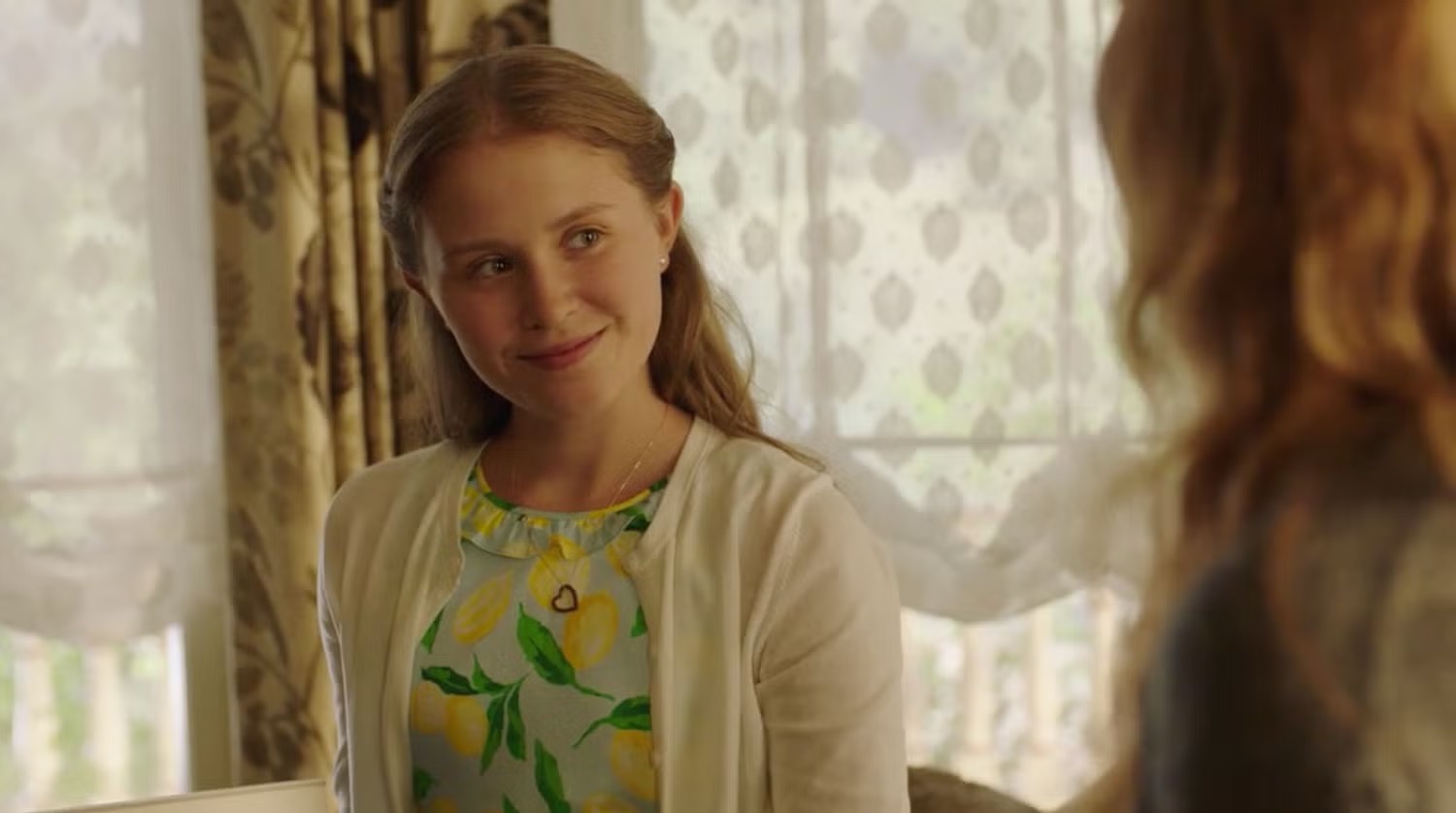
Amma’s visual world is built around contradiction. Inside the Crellin estate, she is presented as an idealized version of traditional Southern girlhood: babydoll dresses, pastel florals, matching cardigans, ribbons, and perfectly styled curls create an almost doll-like appearance. Her bright pink bedroom and miniature dollhouse extend this aesthetic, surrounding her with a world that feels artificial and childlike. But the dollhouse is more than a reflection of Amma’s surroundings—it becomes an extension of her. Just as Adora controls the Crellin house and carefully maintains every detail within it, Amma creates and controls her own miniature world. She arranges its rooms, furniture, and inhabitants according to her own vision, reproducing the same impulse toward order and control that defines her mother. The dollhouse therefore becomes a miniature version of the larger Crellin household: beautiful, carefully arranged, and hiding something much darker beneath its surface.
Outside the house, however, Amma’s appearance changes dramatically. She trades pastel dresses for denim shorts, cropped tops, darker colors, and her signature roller skates, creating a rebellious teenage persona that feels almost entirely separate from her domestic identity. The roller skates give her a sense of speed and freedom as she moves through Wind Gap, visually distinguishing her from the restrained girl seen at home. These contrasting wardrobes demonstrate how easily Amma adapts her appearance to her surroundings, allowing her to occupy different identities depending on who is watching.
The connection between Amma and her dollhouse becomes even more disturbing when its floor is revealed to be made from the teeth of her victims, echoing the pristine ivory floor Adora obsessively maintains in her own bedroom. What first appears to be a symbol of childhood creativity becomes a miniature expression of violence, imitation, and control. Amma has reproduced her mother’s world on a smaller scale, but she has also transformed it into something uniquely her own. The dollhouse becomes a physical manifestation of the identity she has built: beautiful and meticulously arranged on the outside while concealing violence underneath.
The final image of Amma in a long white dress turns this symbolism on its head. The color associated with purity and innocence becomes the visual identity of the “Woman in White” connected to the murders, transforming what initially appears innocent into something threatening. Her femininity becomes theatrical—a costume she can change according to the role she needs to play. In Sharp Objects, innocence is not simply something Amma appears to possess; it is something she knows how to perform.